Safety
Child safety begins with the specification.
A loose operating loop can become dangerous in seconds. The safest response is to remove the hazard by design.
Blind cords and chains present a strangulation risk to young children. It is not enough to assume that a control is high, rarely used or outside a child’s normal reach. Furniture moves, children climb and rooms change use.
For new work, begin with systems that are safe by design: cordless operation, concealed controls or properly designed motorisation. Where a cord or chain remains necessary, the correct safety device must be supplied, securely installed and left in effective use.
Installation is part of the product.
A tensioner, tidy or cleat is not an optional accessory. Its position, fixing and everyday use determine whether it controls the loop as intended. The substrate must accept a secure fixing, and the device must remain accessible to the adult using the blind without becoming accessible to a child.
Current product instructions and applicable standards should be checked for every system. Generic details copied from an earlier project are not a substitute for the manufacturer’s tested arrangement.
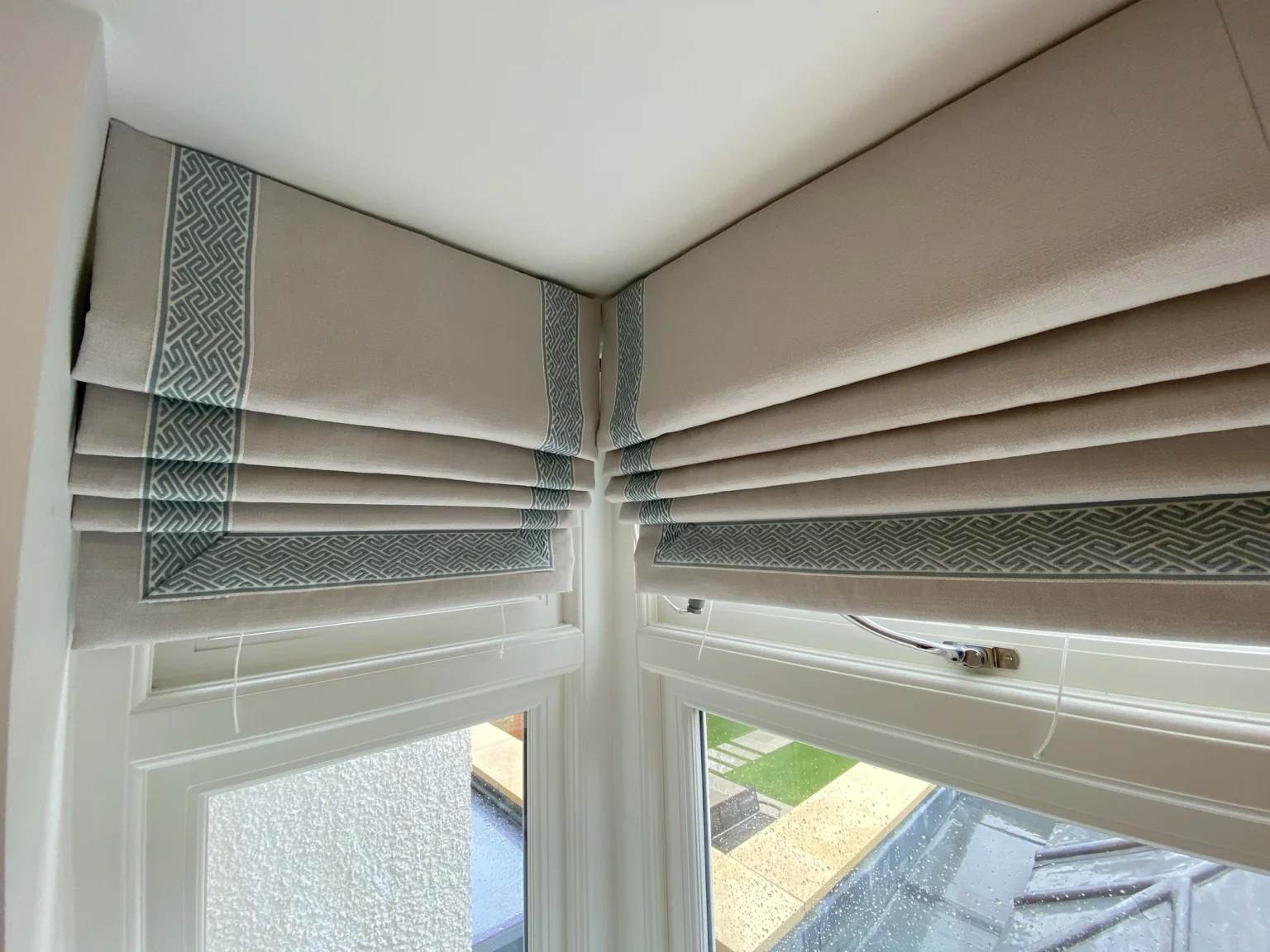
The room matters too.
Cots, beds, highchairs, playpens and climbable furniture should be kept away from window controls. A safe arrangement at handover can become unsafe when a room is rearranged, so this needs to be explained clearly to the person responsible for the property.
Existing blinds deserve the same attention. Check for any looped or loose cords, missing devices, broken fittings or controls that have been released for convenience. If there is doubt, stop using the blind until a competent person has assessed it.
Make safety visible in the schedule.
On a project, record the control method and safety provision for every window. That gives the architect, designer, installer and client one shared reference and prevents safety from being treated as a late site adjustment.
The UK Office for Product Safety and Standards maintains practical blind-cord safety guidance. Product instructions and current regulations should always take precedence over general advice.