Materials
Choose fabric by performance, not just colour.
A beautiful material can be wrong for the window. The useful question is what the room needs the fabric to do.
Interior designers, architects and specialist suppliers each approach fabric from a different direction. The designer sees colour, handle and relationship to the room. The shading specialist also sees roll diameter, seam position, edge behaviour, width limits, light transmission and long-term movement.
The best result holds both views at once. A technically suitable fabric that diminishes the interior is not successful; neither is a beautiful cloth that cannot perform reliably in the proposed system.
Decorative fabrics need interpretation.
Silk, linen, wool and complex woven materials are usually intended for curtains, upholstery or soft furnishings. Curtains and Roman blinds can often use them naturally, with suitable lining and make-up.
A roller blind asks something different. The material must travel repeatedly around a tube while remaining flat and stable. Some decorative fabrics can be laminated or otherwise prepared for this purpose, but the process changes their weight, stiffness, appearance and maximum practical size. A full-size sample is more informative than a small cutting.
Performance fabrics begin with the elevation.
Purpose-made roller and screen fabrics are available in wider formats and in different degrees of openness, translucency and reflectance. A darker, more open screen may preserve an outward view while controlling glare; a pale or reflective backing may respond differently to solar heat. The right balance changes with orientation, glazing, room use and the view beyond.
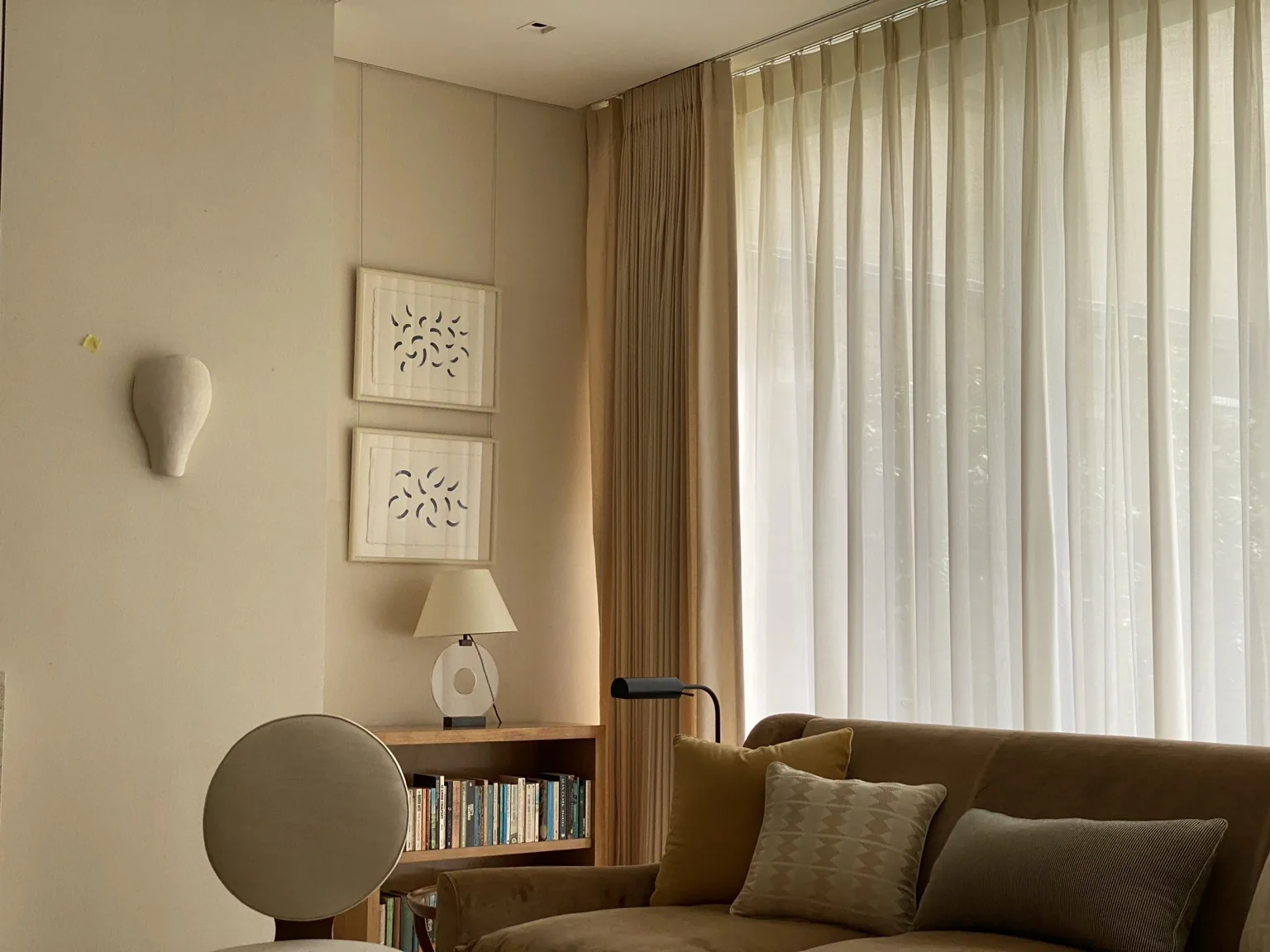
Privacy is also time-dependent. A fabric that appears private in daylight may reveal the room after dark when the interior is illuminated. Where both daytime view and night-time privacy matter, two layers may be more honest than asking one cloth to perform contradictory roles.
Test the decisions that cannot be undone.
Confirm usable fabric width, seam requirements, fire performance where relevant, cleaning method, colour stability and compatibility with the chosen hardware. View samples vertically at the actual window, in morning and evening light, rather than only on a table.
Fabric selection becomes easier when the brief is explicit: protect artwork, soften glare, reduce heat, darken a bedroom, preserve a view or complete the decorative scheme. Once those priorities are ordered, the material can be judged against the job it has to do.