Motorisation
Select the product first, motor second.
Power is only one part of motorisation. Size, sound, alignment, control, access and future service all shape the right answer.
Motor selection is often reduced to a line on an electrical drawing. In reality, it sits between the architecture, the window treatment and the control system. A decision made in isolation can limit the fabric, make the blind unnecessarily noisy or leave the finished connection visible.
Begin with the treatment itself. Record the width, drop, fabric, tube or track, orientation and expected use. Large roller blinds, coupled blinds, long curtain tracks and tensioned skylight systems impose very different loads.
Movement should feel deliberate.
In rooms with several adjacent blinds, speed and hembar alignment are visually important. Products vary in how accurately they remain aligned while moving and when stopped between their limits. This should be checked against the proposed system, not assumed from the word “synchronised”.
Sound matters in bedrooms and quiet living spaces. Compare complete assemblies under realistic load: the motor, tube, brackets, fabric and surrounding pocket all influence what is heard in the room.
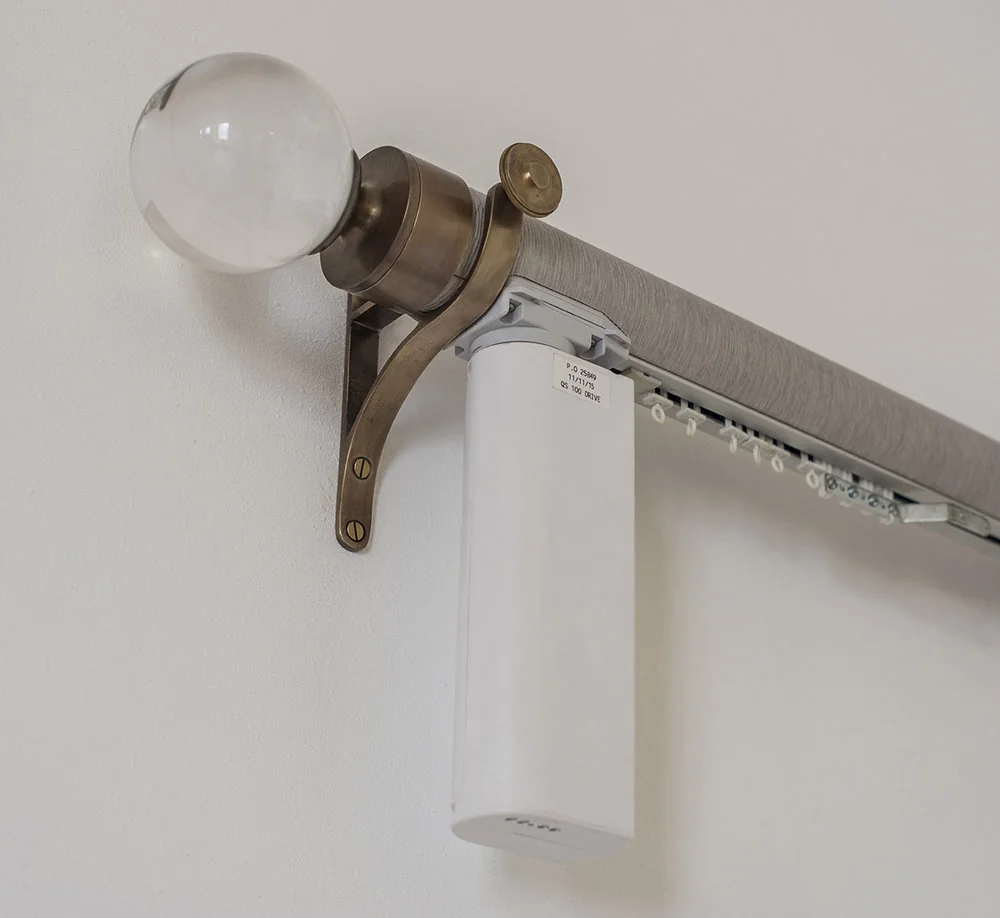
Coordinate power and control together.
Different drives require different supplies, control wiring, interfaces and equipment locations. Those requirements change between product families and over time. Cable specifications should therefore come from the selected system and be agreed with the electrical and automation teams before installation.
Where the final product has not yet been selected, the design team should document the intended performance and agree a flexible containment strategy. Guessing a universal cable arrangement can create false confidence.
Design for commissioning and replacement.
A motor will eventually need adjustment, diagnosis or replacement. Provide access to the drive, connectors and any local control equipment without damaging finished ceilings or joinery. Record isolation, addressing and ownership of commissioning in the window schedule.
The most successful motorised shading is quiet in another sense: it works without drawing attention to the coordination behind it. That apparent simplicity is created early, when the room, system and construction are considered as one package.