Coordination
Drawings are where shading becomes architecture.
A blind pocket is not a standard box. It is the space required by a particular treatment, window and method of access.
Reference details are useful at the beginning of design, but they become dangerous when treated as universal answers. Roller diameter changes with width, drop and fabric thickness. Curtain pockets respond to fullness, heading, track count and the stack required to clear the glass. Skylight systems introduce tension, side channels and additional structure.
The drawing should record the decision, not conceal the fact that one has yet to be made.
Begin with a window schedule.
Give every opening an identifier and record its dimensions, treatment, fabric intent, control method, pocket requirement and interface with the surrounding construction. The schedule becomes the common language between architect, interior designer, builder, electrician, automation specialist and shading supplier.
It also exposes repetition. Similar windows can share a detail; exceptional windows can be identified before they become site problems.
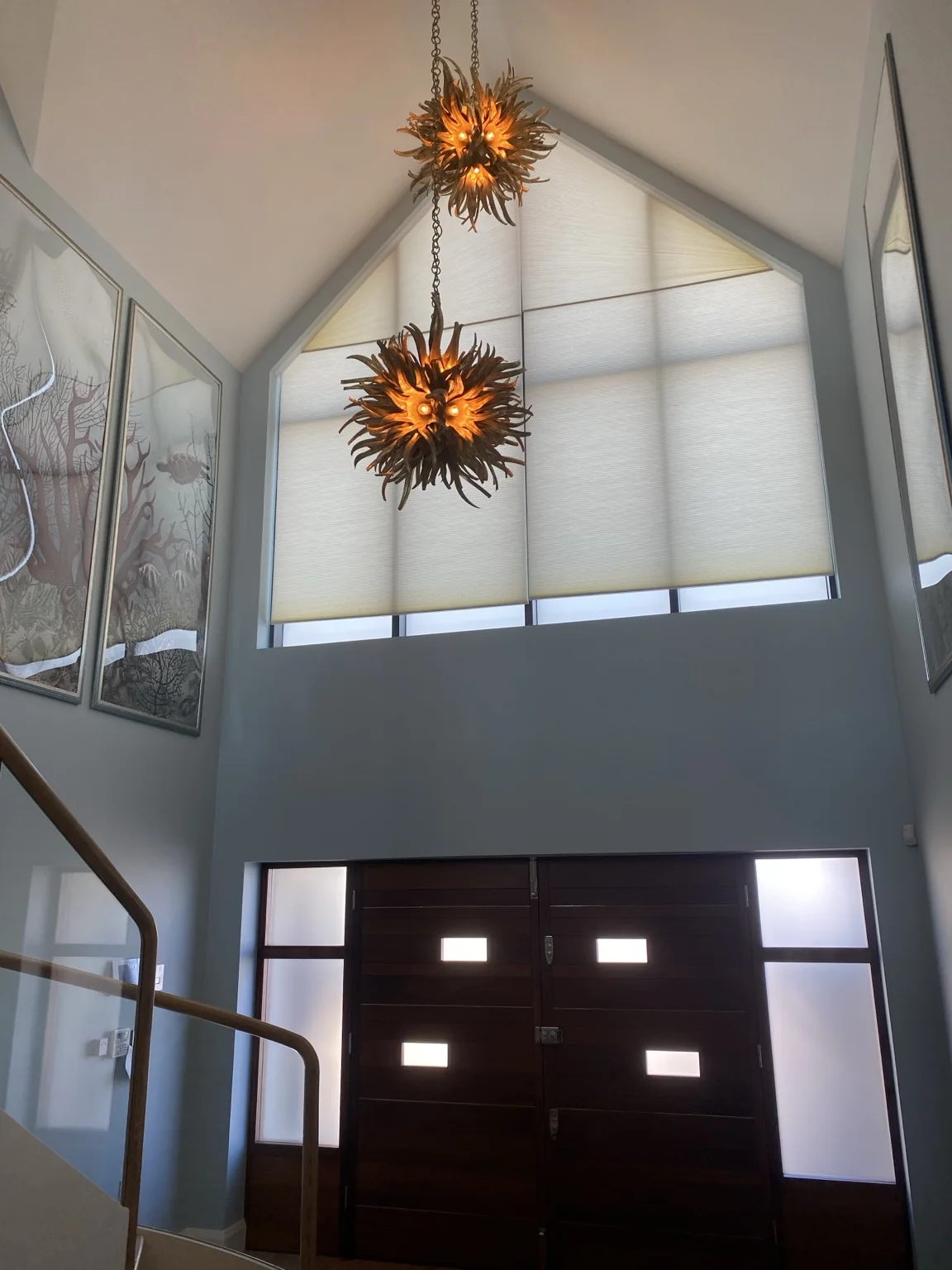
Draw the section that matters.
Show the blind or track at a meaningful scale with the glazing, structure, ceiling, joinery and finishes around it. Include brackets, fixing zones, removable closures, fabric drop, curtain stack and the route to any motor connection.
For concealed systems, explain how they will be installed and removed. A pocket that fits the product but prevents future access is incomplete.
Coordinate responsibility as carefully as dimensions.
State who forms the pocket, provides structural support, installs containment, supplies power, terminates cables and closes the ceiling. Confirm tolerances and the sequence in which each trade needs access.
Early drawings do more than prevent clashes. They allow the window treatment to feel native to the room: hidden when open, composed when closed and maintainable throughout its life. That is the point at which shading stops being an accessory and becomes part of the architecture.